LoadHaste
A freight search system for small carriers that turns vehicle requirements into monitored searches, matched loads, route context, and broker communication.
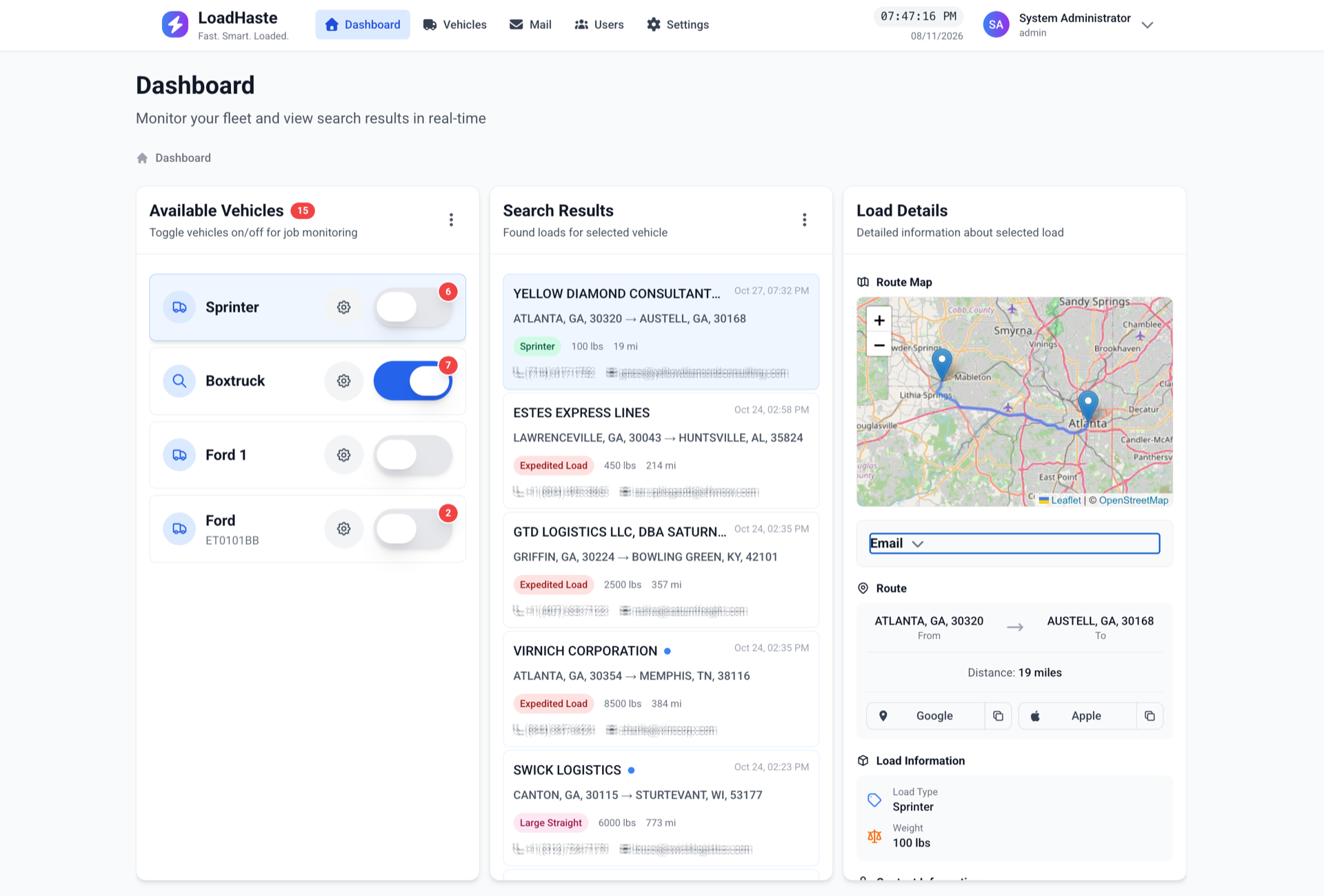
Replace repetitive board monitoring with one operational workflow.
Dispatchers at small carriers repeatedly check freight marketplaces, compare each load with vehicle constraints, inspect routes, and contact brokers. LoadHaste centralizes that workflow while keeping searches tied to the actual fleet.
Keep the interface, orchestration, and acquisition workers independent.
A Next.js application manages vehicles, search criteria, results, routes, and conversations. A Node.js core service is the only component allowed to control Docker. Isolated browser workers collect marketplace data, while Supabase provides shared persistence.
Spend infrastructure only when active work needs it.
The orchestrator starts marketplace workers only when active searches exist and stops them when the queue is empty.
Workers receive time for interactive login, tolerate transient failures, and restart only after repeated unsuccessful checks.
Before creating a worker, the core removes orphaned containers left by previous failed runs.
A SHA-256 signature over meaningful load fields lets a database constraint reject duplicates without trusting marketplace identifiers.
Connection states, FIFO waiting, idle eviction, and automatic replacement keep the application responsive through transient failures.
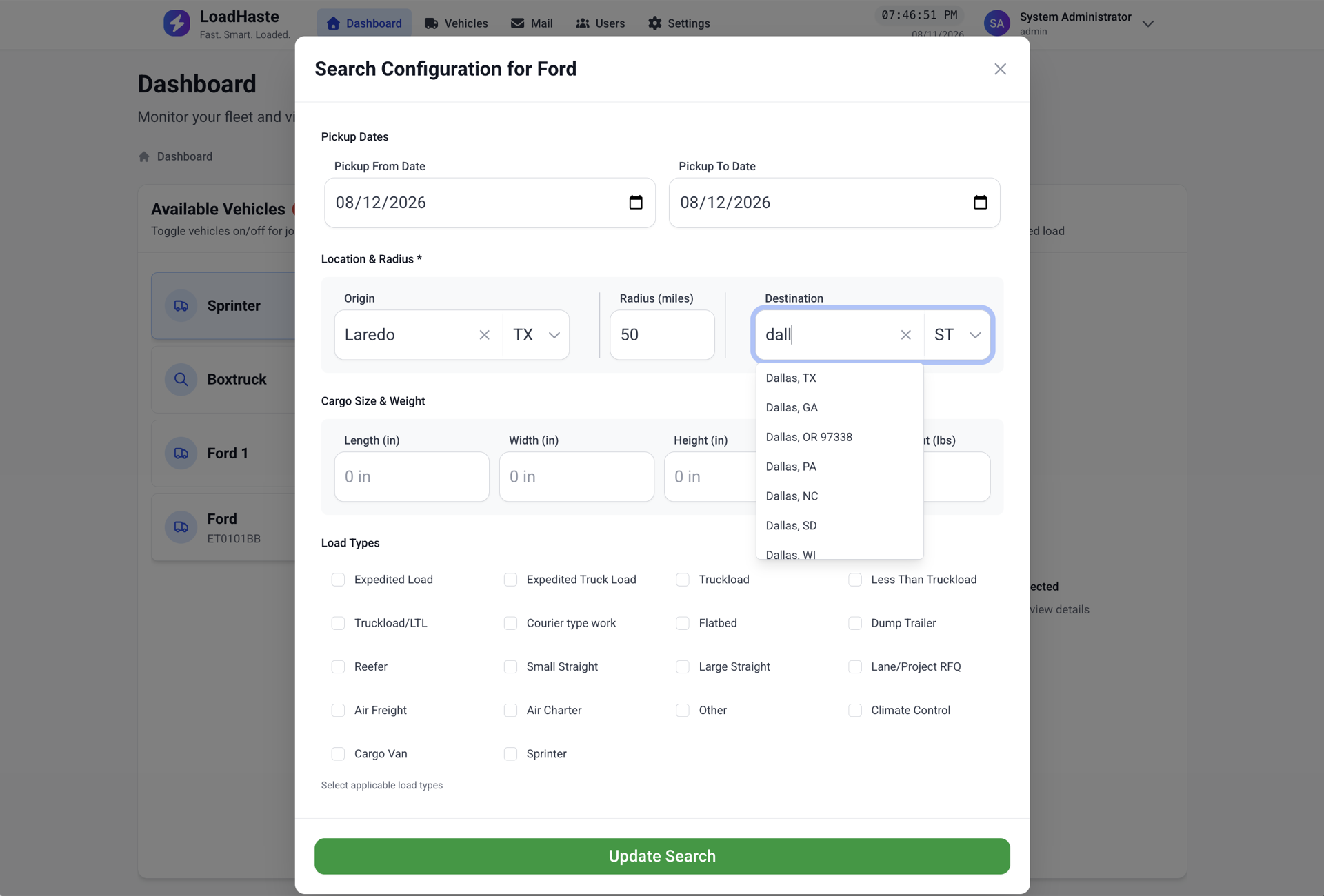
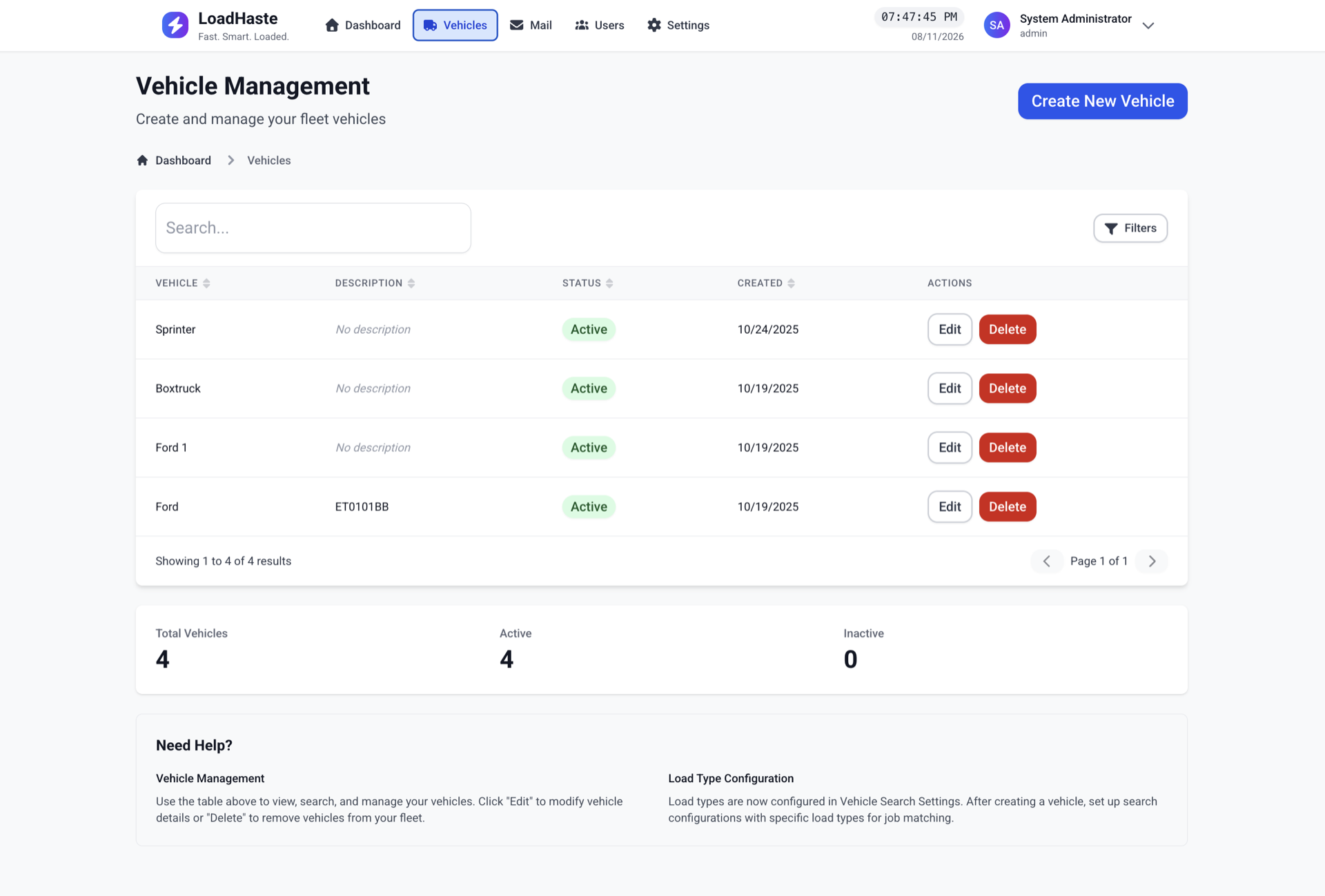
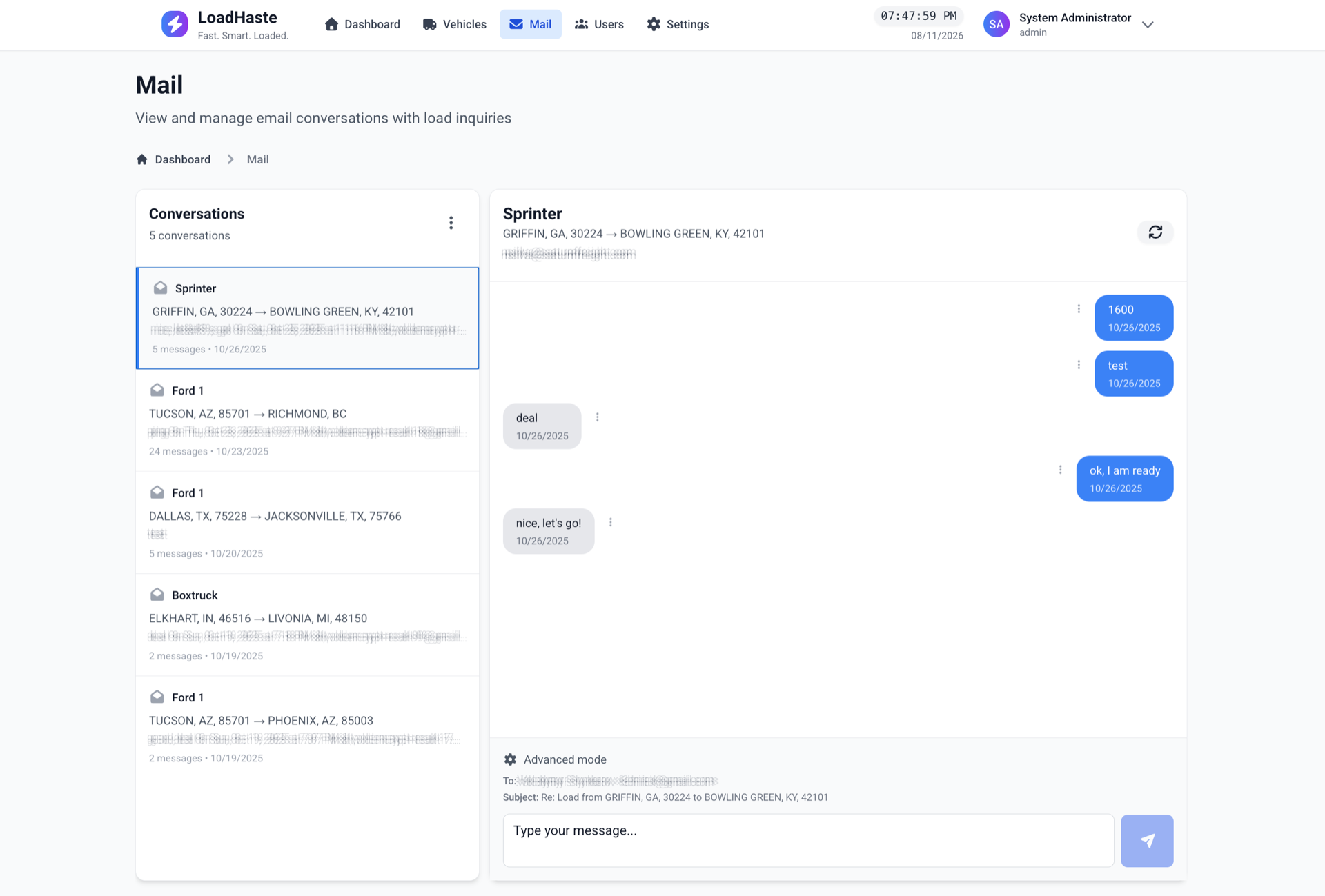
One interface connects the full dispatch workflow.
Stack
- Next.js 15
- React 19
- Node.js
- Docker Compose
- Docker Engine API
- Puppeteer
- Supabase
- Postgres
- Zustand
- SWR
- Leaflet